Friday, October 1, 2021

What’s the Matter With Nigeria?


While the rising crude oil prices may bring short-term relief to Nigeria’s economy, it is not the ‘magic pill’ for the country’s ailments – which include a depressed economy, corrupt and fossilized politics, and general insecurity .


Nigerian Soldiers Matching During the Independence Day Celebration

Were Shakespeare living today, he might find a source of inspiration in the political and economic drama that is currently going on in Nigeria. Old political enemies shake hands, former political  friends stab each other in the back, kidnappings and crimes flourish,  and talks that everything is expensive fills the air in the country’s major cities such as  Lagos, Benin, Enugu, Onitsha, Owerri, Abujah, Kaduna, Maiduguri, and so on. In such a fevered atmosphere, the first day of the month of October  promises to be crucial because on that day Nigeria celebrates their  sixty-one years of Independence from their former colonial master, Great Britain. It ought to be a day of both celebration and quiet satisfaction. But, in my view as a Nigerian, there is really nothing to celebrate.  Seriously, what is there to celebrate when most Nigerians could barely afford the basics things of life including  food, shelter, housing, and transportation? For instance, since February, the bus and taxi fare Nigerians pay to go to work, school, or take care of  the other business have more than doubled. The price Nigerians pays for food items have also increased astronomically:    In general, Nigeria’s inflation is running at more than 18 percent. At 23 percent, the value of the inflation prices for food is the highest in two decades, according to the Economist. More than 50% of Nigerians are either unemployed or work in the informal sector of the economy. About 80 million of Nigeria’s 200 million people lived on less  than the equivalent of $1.90 per day before COVID-19. Available published evidence from the World Bank noted that the pandemic and population growth could see that figure rise to almost 100 million.

With fair justification, it makes a lot of sense to say that Nigeria’s economic woes is the reason for a vertiginous rise in crime. Without putting it in so many words, more people were kidnapped in Nigeria in the first four months of 2021 than all of 2020. Economic hardship and political radicalism has added to worsening violence around three flashpoints: a long-standing conflict between farmers and the Fulani tribe’s cattle-herders across central Nigeria (Middle belt); the jihadists of Boko-Haram in the north-east; and fighting between the government security agents and the IPOB – the Igbo separatists in the south-east.

There is no denying that COVID-19 has slammed economies everywhere. However, Nigeria’s economic woes started before the COVID-19 pandemic. There is plenty of academic evidence that shows that a country’s gross domestic product (GDP) is a good metric for measuring the value of all products and services a country produces in a year. Sadly, Nigeria’s GDP per person has fallen every year since 2015 – which is the year in which oil prices collapsed in the commodity market. A growing body of evidence suggests that by the end of year 2021, the real income per person in Nigeria (which is considered the ‘giant of Africa’ because it is the home for more than 16 percent of the sub-Saharan Africa’s people) will be at the same level it was in the 1980s. It will be logical, therefore, to suggest that Nigeria desperately need reforms. However, it will be very difficult to enact or implement the needed reforms in a country that exempts from the rule of law those who can buy or bargain their way around it, such as corrupt politicians, bureaucrats, and privileged business owners.

Wounded Tiger

It is no secret that while crude oil makes up about 9 percent of the Nigeria’s GDP (see figure 1), it accounts for more than half of the government’s revenues since it is the country’s main export product – as much as 80% of Nigeria’s exports is crude oil. The slump in the crude oil prices since 2014 hit Nigeria very hard, especially its domestic and foreign trade. Simply put, when crude oil prices fell from over $100 a barrel in 2014 to less than half of that by July of 2020 squeezed the supply of foreign exchange desperately needed by the country. Economic logic dictates that the best approach managing such exchange rate shortages is for the affected country to allow their exchange rates to fall – a strategy that might also make their imports more expensive. This approach can be painful in the short term because it can cause inflation in the affected country. But it is a price worth paying because it usually helps to boost the country’s exports by making them more competitive – an effect that, in the long run might help its currency to gradually recover its lost value. It is worth noting here that Nigeria would be less vulnerable to swings in the oil price if it could make, grow, or mine more for export.

Figure 1


Unfortunately for Nigerians, the government of President Muhammadu Buhari followed a totally different and ineffective approach: he restricted imports in his effort to prop up the naira, the country’s currency, which he sees as a measure of Nigeria’s strength. As a way of conserving the available dollars, the Central Bank of Nigeria (CBN) has banned those intending to import almost 50 items from buying foreign currency. During the moth of April, wheat and sugar were added to the list. It is worth remembering that President Buhari had earlier closed the Nigeria’s land borders to goods in 2019 to stop smugglers undermining local producers. The bad news is that all his moves have fueled food price inflation: the country’s inflation has remained at near four-year highs with food price growth at more than 20 percent year-on-year.

President Buhari’s economic and exchange rate policies have also hobbled manufacturing firms by making it hard for them to obtain inputs. In most  cases, a manufacturer is considered lucky if they get, say, 20 percent of the forex they requested at a particular point in time. It is thus not surprising why many  Nigeria’s manufacturers, especially those of them that import machinery (including computers) and chemicals (as well as medical equipment), uses the volatile black market, where dollars cost almost 30 percent more than the official rate. It is indeed obvious that Nigeria’s economy is in shambles. And, despite all the unorthodox controls put in by President Buhari’s government, the CBN was forced to devalue the naira twice last year. Ask any Nigeria’s business owner about the forex situation and the reply is the same: they are getting neither a stable currency nor access to dollars.

President Buhari’s government appears to be slowly changing its tune, having learned the hard way that their economic model, which is hard to fathom, is wrong in principle and has failed in practice. According to Bismark Rewane, a member of President Buhari’s council of economic advisers, the government is starting to pay more attention to exporters. As a prove, he pointed to the country’s partial reopening of the land borders for goods in December, 2020, as well as to the country’s signing of the African Continental Free Trade Agreement in 2019. If the experience of the past few years teaches us anything, it is that sustained growth in exports required more than just opening the border. In plain terms, many Nigerian firms are uncompetitive because they are being crushed by red tape and government failures.


The Bad, and the Ugly

It is worth pointing out that Nigeria runs a government that is allergic to the economic doctrine of adherence to free markets, limited state and open meritocratic society. Electricity blackouts are maddeningly frequent in the country. The country’s roads are death traps and its ports are always clogged up. To move a container about 30 kilometers from Lagos’ Premiere port to the city can cost as much as the naira equivalent of $4500 – which is almost the cost of shipping the same container 12,000 kilometers from China. When it comes to the World Bank’s ease-of-doing-business index, Nigeria ranks 131st out of 190 countries. The country’s court system, which are supposed to prosecute crimes and enforce contracts are a sham, and jobs rely more on connections and kickbacks than merit. The country’s corrupt civil servants are also part of the problem: they often see jobs as hereditary sinecures, their ministries’ budget and the average Nigerian needing any form of government service as revenue streams to be milked, and any attempt to monitor the quality of the services they seldom provide as an intrusion on their work. There is no doubt that some of the country’s  industries, particularly the information technology (IT) sector, are growing. The truth is that the growth being experienced in these sectors are independent of the government’s actions.

So what lessons should be drawn from the Nigeria’s experience? The obvious one is that, to survive in Nigeria, one has to be an eternal optimist. Second, stalled reform is typical of Nigeria’s troubles. For more than three decades cash from the sale of crude oil has been used to subsidize things like fuel and electricity. The easy revenue from the sale of crude oil have also allowed the federal and state governments to get away with  both corruption and abysmal tax collection.

As we celebrate our sixty-one years of independence, I have no doubt in my mind that many Nigerians have had enough. Almost 70 percent of the Nigerians I spoke to want to emigrate to either Europe or America. The truth is that running away will never solved our problems. As we celebrate our Independence today, I believe that this is the time we begin demanding accountability from our local, state and federal governments. Given that no democracy thrives on apathy, the moment we start to do this as Nigerians, our lives and fortunes will begin to change in a positive way.


Notes

The Economist. (2021, May 15). Hard Times: Nigeria’s Economy is Stuck in a Rut. Retrieved from Middle East & Africa: https://www.economist.com/middle-east-and-africa/2021/05/13/nigerias-economy-is-stuck-in-a-rut

Greg, I. P. (2013). The Litlle Book of Economics: How the Economy Works in the Real World. Hoboken, NJ: John Wiley & Sons, Inc.

Momodu, D. (2021, September 11). The Mistakes Nigerians Must Not Repeat in 2023. Retrieved from Thisday Live: https://www.thisdaylive.com/index.php/2021/09/11/the-mistakes-nigerians-must-not-repeat-in-2023/

Soto, A. (2021, June 15). Surging inflation in Nigeria fuels crime wave, says World Bank. Aljazeera. Retrieved October 1, 2021, from https://www.aljazeera.com/economy/2021/6/15/surging-inflation-in-nigeria-is-fueling-crime-wave-world-bank

Statista. (2021). Contribution of oil sector to GDP in Nigeria from the 4th quarter of 2018 to the 1st quarter of 2021. Retrieved from https://www.statista.com/statistics/1165865/contribution-of-oil-sector-to-gdp-in-nigeria/

Macrotrends. (2021). Crude Oil Prices - 70 Year Historical Chart. Retrieved from https://www.macrotrends.net/1369/crude-oil-price-history-chart


Thursday, April 23, 2020

Your Stimulus Payment: Everything You Need to Know – and What You Should Do With Your Money


IRS Explains The “Payment Status Not Available” Stimulus Check Error
Source: (Source: Google [Alphabet, Inc.])

The bottom line here is that the coronavirus money could be the chance you need to get into the market and have a piece of the action. What are you waiting for? You actually have nothing to lose.


The Word On the Street

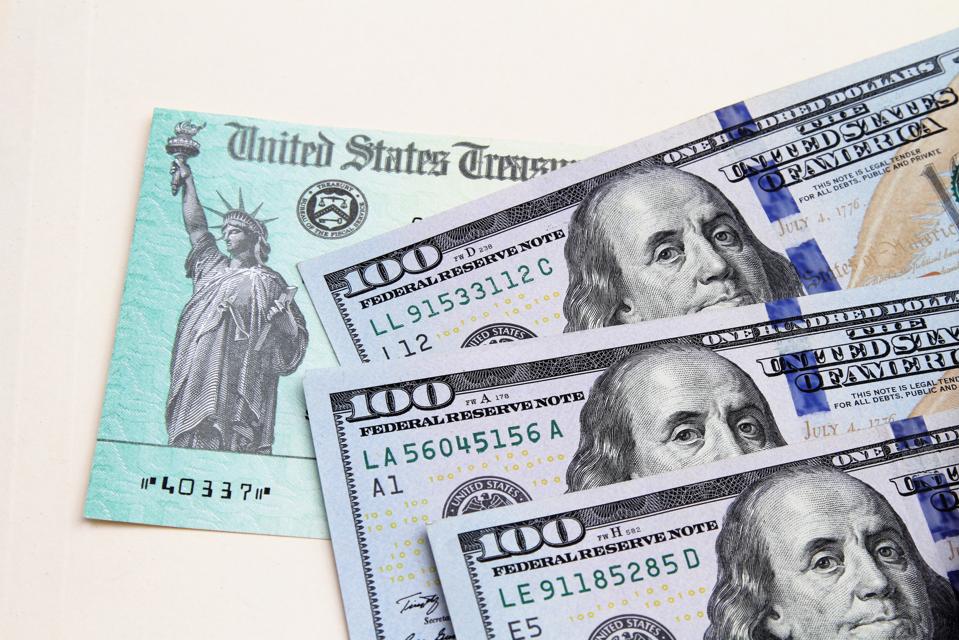
Since last February, the U.S. economy has been creaking under the pressure of the coronavirus pandemic, which has brought the country almost to its breaking point, forcing many of its businesses to close down and many workers to lose their jobs. It is indeed a good thing that the U.S. government decided to step in to bail out its businesses and the country’s citizens with the Coronavirus stimulus package – a $2 trillion relief bill (known as the CARES Act) that will send money directly to Americans, greatly expanding unemployment coverage, guaranteeing  loans to businesses, and making a number of other changes.1 Given that the U.S. government is willing to lend their hand to help its citizens recover from the hardship that resulted from the Coronavirus crisis through direct payments, the questions that naturally arises are: Who gets the stimulus checks? Who doesn’t get a check? How and when will the government send the stimulus check? Is this a one-time payment? What are the best things to do with the stimulus check? Because the hope of receiving the coronavirus check is now something that has become a national fixation, this article will attempt to answer these questions briefly in their order.   

The bottom line here is that many Americans are now receiving government checks of up to $1,200 (plus $500 per child) as part of the $2 trillion coronavirus relief package. By sending these checks, the U.S. government intends to help them ride out  job loss, reduced work hours, and other money challenges that they may suffer as a result of the coronavirus crisis.

Who is Eligible for a Stimulus Check?

According to published reports about 93.6 percent U.S. tax filers (or approximately 140 million U.S. households) will get the stimulus check in April of 2020. Broadly, your eligibility is based on two factors, namely, your most recent tax return and your adjusted gross income.2 This means  that if you already filed 2019 taxes, the Internal Revenue Service (IRS) will use the information therein to determine your eligibility for the coronavirus check. But, if you have not filed your 2019 taxes yet, then the IRS will use your 2018 tax return to determine if you qualify. It is important to note here that the benefit is also available to those who do not file taxes, particularly those Americans who receive Social Security benefits, provided that they have received their RB-1099 or SSA-1099 forms.

Among those who are eligible for the check, the breakdown of how much they will receive is explained in table 1 below. In addition to the information in table 1, those Americans  who are eligible for the stimulus payments and have children will also receive an additional $500 payments for each child under 17 years.

Table 1

Who Gets a Stimulus Check?

Category
Estimated Amount/Payment ($)
Single adults with income up to $75,000
1,200.00
Single parents who filed as head of household with income up to $112,500
1,200
Single adults with income of $75,001 to $99,000
Reduced check (less than $1,200)
Married couples with income up to $150,000
2,400.00
Married couples with income of $150,001 to $198,000
Reduced check (less than $2,400)


Who is Not Eligible for a Stimulus Check?

It is worth bearing in mind that not every American will receive the coronavirus relief check. For instance, if you are a single adult and you make more than $99,000 a year, then you won’t get the check. Also, all the married couples that make more than $198,000 a year won’t receive stimulus checks either. Other people who will not receive the check include those without a Social Security number and those who are nonresident aliens (that is, those who are not U.S. citizens or U.S nationals).3 Some U.S. residents who have no green cards or who have not passed the substantial presence tests are also not eligible for a stimulus check. Finally, if your parents claim you as a dependent on their tax return, then you won’t get a stimulus check.


How, and When Will the Government Send the Check?


If you filed taxes in 2018 and 2019 then the IRS will use the direct deposit information you provided to send your money. There’s another option for receiving your money: the IRS will mail you a check instead if you have no direct deposit information on file, or if the account you provided when you filed your tax return is now closed.

This leads us to the next question: when will the stimulus check arrive? At a White House briefing on April 2, the Treasury Secretary Steven Mnuchin promised Americans that those that signed up for direct deposit will receive the payments within two weeks.4 The truth is that many Americans who have their direct deposit information with the IRS received the coronavirus payments on April 15, 2020, thereby confirming Steven Mnuchin’s promise.

How about those Americans who do not have their direct deposit information with IRS? The IRS has created an online portal so that those Americans in this group will provide the agency with the information so as to get their payments faster – specifically, within a couple of days of them providing that information. The portal can be accessed by visiting or clicking on the link shown in figure 1 below.


Figure 1: Get My Payment Portal


  https://sa.www4.irs.gov/irfof-wmsp/login


For those Americans who did not provide their direct deposit information to the IRS, the only option is to wait for paper checks to be mailed to them. This means that they will receive their payments later, as paper checks would start to be sent out on April 24, while some of them wouldn’t be sent out until September of the year.

There are some Americans who are not required to file tax returns due to the size and the sources of their incomes. The IRS requires those Americans in this category to file their tax returns if they want to receive the stimulus check. Again this means a longer wait for them. The timetable for their first checks is shown in table 2. The rest of the checks will be paid to the eligible Americans by gradually increasing income increments each week. If your household earned $198,000 and you filed your tax jointly with your spouse, for instance, then you will get a reduced check on September 4, 2020. Those who didn’t have tax information on file and had to apply for checks will receive the last group of checks on September 11. It should be noted here that Social Security recipients don’t need to provide additional information, but still must meet the eligibility criteria to get the stimulus check.


Table 2

Americans With Lowest Income: Timetable for Their First Stimulus Checks

Income Group($)
Dates for Mailing Coronavirus Stimulus Checks
Taxpayers with income up to $10,000
April 24, 2020
Taxpayers with income up to $20,000
May 1, 2020
Taxpayers with income up to $40,000
May 15, 2020


How to Check the Status of Your Check

You can check the status of your check, or speed up the delivery of your coronavirus check through the IRS website shown in figure 1. This site also allows you to provide your bank account details needed to receive an electronic payment if you haven’t done so already. In addition, the site allows you to check when the payment will arrive. As of the middle of April 2020, more than 6.2 million U.S. taxpayers have used the site to learn their payment status, according to the IRS. It should be noted here that the IRS has direct deposit information for fewer than half of America’s estimated 170 million taxpayers in their database.5 This explains why they created the website to speed up the coronavirus stimulus payments to more Americans.

While more than 1.1 million America’s taxpayers were able to provide their banking information at the site as of the middle of April 2020, there were reports from others who encountered delays or difficulties using the site. Even though IRS has been working tirelessly to resolve the issues, they have also provided a list of frequently asked questions (FAQ) on its website to assist people who might seek more clarifications about the payment. This website is shown in figure 2 below.


There are a few more things about the site that you need to know. First, it does not allow people to change their direct deposit or bank account information that the IRS (or the government) already has on file.  This means that if you have already closed the bank account you used for direct deposit last year (that is, 2018 tax year), then the bank will send your money back to the government. In that case, the IRS will mail a paper check to your last known address they have on their file. Second, many people received the error message ‘Payment Status Not Available’ when they tried to use the site to check the status of their check. If this happened to you, it may mean many things. For instance, it could mean that either you are not eligible for the payment, or that you have not filed 2018 or 2019 tax return as required by the IRS. It could also be that you recently filed a tax return that has not been processed, or that you are currently receiving Social Security, disability or Veterans Affairs benefits, according to the IRS.

Is this a One-Time Payment?

In plain terms, the correct answer is a yes, at least for now.6 The truth is that Congress will have to pass new legislation if there is to be another wave of similar economic relief payments. Even if they would pass a new bill in that regard, it remains unclear whether direct stimulus checks would be included again. It is worth remembering that through expanded unemployment benefits and loan programs for small businesses in addition to the stimulus checks, the CARES Act addresses many short-terms needs of the U.S. economy. The government may roll out phase two of the Act if the economy continues to struggle for an extended period. However, phase two might require different actions from the government, such as some type of belt-tightening or austerity measures.  


Donald J. Trump's name will be on stimulus checks in unprecedented ... Figure 3: A New Wave of Coronavirus Relief Payments will Require a New Congressional Legislation. (Source: Google [Alphabet, Inc.])


Will I Get the Check If I Took a RAL Loan?

You may experience a delay in receiving your coronavirus stimulus check if you had previously filed your taxes with companies such as H & R Block, Jackson Hewitt, and Turbo Tax. This is because these companies offer services known as refund anticipation loans (RAL) – a service whereby their customers can get refunds due to their tax returns immediately for a fee.7 They usually  provide RAL loan to their customers using debit cards that are attached to temporary bank accounts. The problem here is that the IRS may not have those individual’s direct deposit information on file to make the payments, hence the delay. Both the IRS and the Treasury Department are aware of this problem, which may be affecting only a portion of these companies' clients. So, if you have a RAL loan in your 2018 or 2019 tax filling, the Treasury Department and the IRS recommended that you access the Get My Payment app or portal shown in figure 1 to enter your direct payment information.      By doing this, you will know your status vis-Ć -vis the stimulus check.


Will I Have to Pay the Stimulus Check Back?

Let me put it as simple as I can: the good news is that the stimulus payment is not a loan so you don’t have to pay it back. It does not count as a taxable income either, so you will not owe tax on your payment. There is even more good news: the stimulus payment will not reduce your tax refund or increase the amount you owe when you file your 2020 tax return next year, according to the IRS.8 In addition, receiving the stimulus check will not affect your income for purposes of determining your eligibility for federal government assistance or benefit programs. The simple truth is that the stimulus check is a bit of extra money the government is giving you at a time you needed it most. So, no worries!


What to do With the Coronavirus Check

So you have received your coronavirus stimulus money. Like most Americans, it very possible that you have already made up your mind how to spend the money. But, have you considered that this may be your one shot at building an emergency fund, or at investing in stocks? Note that this article is not trying to tell you how to spend your money. If you need to pay for medications, groceries, and sudden life emergencies, use the money by all means. It is important to take care of those things because they will always be an important part of your financial lifeline. However, if you are interested in making the most of this money, there are some things you should do after accounting for critical expenses. Below are a few of them.

Creating an Emergency Fund

This might be the right time to create an emergency fund or to further build emergency savings. According to financial planners, you need to have a liquid fund of at least three to six months of living expenses.9 The reason for this is very simple: your emergency fund will provide a good financial cover for you in the event of an unexpected financial blow as well as help prevent you from going into debt. A sufficient emergency fund also provides peace of mind if you lose your job. In addition, your emergency fund provides both a financial shield and peace of mind if you suddenly become too ill to work or have to cover a major car or home repair.10

Are you trying to pay off debt? Then your emergency fund is your best friend. This is because it can help you stop adding to your debt with every financial bump in the road. Life happens and things you don’t budget for, like car repairs or medical costs, might raise up their ugly heads. With a sufficient emergency fund, you can easily cover these stressful events and stay focused on getting out of debt. It is important to note here that when you have a financial cushion for unexpected expenses, it is often easier to pay extra money on debt right away. And, by the time you know it, you will be free of debt.

Do you only have only one source of income? Then you need an emergency fund the way you need air in your life. Simply put, a substantial emergency fund will help you get through an unexpected job loss or illness if you only have one source of income. In plain terms, my rule of the thumb is that you should have at least two year’s worth of expenses in your emergency fund if you are a one-income family.

According to the available published evidence, about 53 percent of U.S. adults do not have an emergency fund that covers at least three months of expenses and 49% of them expect to be living paycheck to paycheck in 2020.11 In addition, a large number of Americans are currently, or will be, struggling with unexpected medical expenses. This simple fact alone should make the conservation of cash in the form of an emergency fund the order of the day.

Pay Down or Pay Off Your Debt

The truth has remained that U.S. adults have been taking on increasing amounts of debt long before the spread of coronavirus brought the country’s economy to a near standstill. A  New York federal reserve employee, who asked to remain anonymous for privacy reasons, said the U.S. has surpassed $1 trillion in credit card debts – a value that is considered the highest since the great recession.

So, if you have a large amount of debt, you would be better off putting your stimulus check to good use by paying down some of those high-interest balances you have. Too much debt depresses your credit score and can hurt you in many other ways, such as being turned down for a job (especially upper management or finance industry jobs), being denied a car loan and having a difficult time renting a house or an apartment. This is one of the reasons most financial planners recommend keeping your consumer debts (such as credit cards, car loans, and so on) payments below 20 percent of your monthly salary.

Start Investing

I know that this might sound strange to you, especially in these days of coronavirus pandemic when the stock market has plunged significantly. But, if history is any guide, this is actually the best time to invest in stocks: you buy when there is blood in the street – even if it’s your own blood.12 This is because at this time when the market has experienced a sizeable drop, you can buy the stocks of good companies at a deep discount. During the 1973-1974 bear market, for instance, the U.S. stock market lost 42 percent of its value within 22 months. This gave Warren Buffet, one of the most successful stock investors in the world, the opportunity to purchase a stake in Washington Post Company at a steep discount. This investment later increased by more than 100 times the purchase price and made Warren Buffet even richer. At the time the Washington Post Company had only an $80 million market capitalization - a term used to describe the total dollar market value of a company’s outstanding shares of stocks. The company was sold to Amazon’s billionaire  founder and CEO Jeff Bezos for $250 million in cash in the year 2013.13  

But I don’t have millions of dollars to invest in the stock market, you might say. The truth is that you don’t need to be a millionaire to invest in the stock market. You can start small by investing, say, $100 every month in mutual funds such as T. Rowe Price or in index funds such as Vanguard S & P 500 Index Fund. It is worth bearing in mind that investing is not hard – you just have to treat it like your monthly bill. This is how to do it: simply open account with a good mutual fund company (I always recommend index funds or exchange-traded funds [ETFs], such as Vanguard S & P 500 Index Fund and SPDR Gold Trust) and set up an automatic allotment of say, $100 to $200 from your checking account each month. If you treat stock investment as a bill in this way, it means that you have made investing part of your budget; and in a couple of years, you will be surprised how rich you will become, no matter what the market is doing.

Again, though the market is down now, it will bounce back in a few months or years. Data from the 2008-2009 financial crises (and other financial crises before it) showed that, for those stock investors who got in when the market was down and stayed the course have their stock values fully bounced back within three years, or by the end of 2010. The bottom line here is that the coronavirus money could be the chance you need to get into the market and have a piece of the action. What are you waiting for? You actually have nothing to lose.


References
1Bernard, T. S., & Liebar, R. (2020, April 14). F.A.Q. On Stimulus Checks, Unemployment and the Coronavirus Plan. The New York Times. Retrieved April 14, 2020, from https://www.nytimes.com/article/coronavirus-stimulus-package-questions-answers.html
2Tsekova, D. (2020, April 13). Coronavirus Stimulus Checks: IRS Plans Tool That Will Let You Track the Money. Yahoo! Money. Retrieved April 14, 2020, from https://money.yahoo.com/coronavirus-stimulus-checks-irs-tool-lets-you-track-the-money-to-your-household-145659731.html
3ibid
4Jagoda, N. (2020, April 2). Mnuchin: First Coronavirus Rebates to Be Issued 'Within Two Weeks'. The Hill. Retrieved April 16, 2020, from https://thehill.com/policy/finance/490919-mnuchin-first-coronavirus-rebates-to-be-issued-within-two-weeks
5Wire, S. D. (2020, April 15). Some Americans Can Get Stimulus Payments Faster With Newly Launched IRS Site. Yahoo! Finance. Retrieved April 18, 2020, from https://finance.yahoo.com/news/americans-coronavirus-payments-faster-newly-123309731.html
6Harris, J. (2020, April 13). When Will Coronavirus Stimulus Payments Arrive? A Primer on the Federal Relief Plan. Los Angeles Times. Retrieved April 18, 2020, from https://www.latimes.com/business/story/2020-04-13/when-will-coronavirus-stimulus-checks-arrive
7Konish, L. (2020, April 16). Your Stimulus Check Could Be Delayed If You Got an Advance On Your Tax Refund. CNBC. Retrieved April 18, 2020, from https://www.cnbc.com/2020/04/16/use-a-commercial-tax-preparer-your-stimulus-check-may-be-delayed.html
8Internal Revenue Service. (2020, April 18). Economic Impact Payment Information Center. Retrieved from https://www.irs.gov/coronavirus/economic-impact-payment-information-center
9Caldwell, M. (2019, November 20). 8 Reasons You Need an Emergency Fund. The Balance. Retrieved April 18, 2020, from https://www.thebalance.com/reasons-you-need-an-emergency-fund-2385536
10ibid, para. 2
11Dickler, J. (2020, March 25). Here’s What You Should Do With Your Coronavirus Rescue Check. CNBC. Retrieved April 19, 2020, from https://www.cnbc.com/2020/03/25/best-ways-to-use-your-coronavirus-rescue-check.html
12Myers, D. (2020, March 9). Contrarian Investing: Buy When There's Blood in the Streets. Retrieved from Investopedia: https://www.investopedia.com/articles/financial-theory/08/contrarian-investing.asp
13ibid, para. 8

Wednesday, April 8, 2020

The Coronavirus Emergency Aid Bill: What it Can – and Can’t – Accomplish


In plain terms, while the  huge stimulus packages from America and Europe may not stop the economic consequences of closures, outages, and interruptions to businesses, they might induce the type of sentiment that would accelerate economic recovery. 


President Trump Signing COVID-19 $2 Trillion Stimulus Bill
Source: Alphabet, Inc.


Since last month, the stocks have tumbled significantly in response to the likelihood of a recession resulting from the worldwide efforts to contain or slow down the spread of coronavirus(otherwise known as COVID-19). Now, both the European and North American countries are trying to ride to the rescue. Last March, after making a commitment to spend ₤50 billion to cushion its economy from the ravages of COVID-19, the British government announced an additional ₤350 billion in business lifelines, tax relief and loan guarantees.1 France, Germany, and several other European countries have also unleashed billions of euros in fiscal stimulus, in addition to literary suspending the European Union(EU) debt rules. The largest COVID-19 stimulus package so far came from the United States, with the signing of the COVID-19 bill by President Trump last month – a bill that is worth $2 trillion worth of tax credits, direct payments, and provisions to workers and businesses impacted by the virus’ containment measures.2 Given this massive wave of liquidity lurking at this moment, the pivotal question is whether investors are able to set reasonable expectations of what it can – and can’t – do.

In a broader sense, all these huge stimulus packages from America and Europe won’t really stop the economic consequences of closures, outages, and interruptions to businesses and day to day activities. Just like monetary policy, the stimulus packages can’t reopen the stores and restaurants across the nations that have either trimmed store hours or closed voluntarily or because of curfews. It can’t end the lockdown affecting New York City.3 It can’t heal the sick, return people to the workforce, reopen businesses, libraries, or schools. Above all, it can’t force the coronavirus to fade with the flu season that generally begins in April or May. The bottom line is that life will start returning to normal only when this crazy Coronavirus fades. And that will happen after this coronavirus pandemic had run its course at the end of, say, May, regardless of how much stimulus package the European and North American governments load into their metaphorical cannons.4
In plain terms, the governments and central banks, including those of Europe and North America, are not saviors. Simply put, the global economy and financial markets don’t really need a savior. The reason for this is clear: business cycles, including the current bear market, turn with or without stimulus. In the long run, stocks usually move in advance of economic data. As a matter of fact, many bull markets have begun long before data improved. Take the last U.S. bull market. When it began in March 2009, the available economic data and corporate earnings were still awful, unemployment rate and bankruptcies were both high, and most countries in Europe and other parts of the world was contracting. The recession did not end until July of that year. Not only that, data revealing the dawning of a bull market also didn’t come out until late summer and early fall of that year – a period that was nearly six months after the stocks bottomed. The implication of this is that stocks seldom wait for improved economic data. In most cases, all the economy and financial markets need to recover is a positive sentiment across the board – the kind of sentiment that creates an easy benchmark for some type of not-as-bad-as-feared reality to crystalize into people’s collective consciousness.5

Although some analysts might rightly argue that governments and central banks globally had announced trillions of dollars worth of stimulus before the stocks bottomed in 2009. In my view, that was a lucky coincidence, and I said that for one simple reason: just consider a few years ahead, to 2012. That was the time when Eurozone was in the midst of its sovereign debt crisis6 and a recession that began in 2011. Available published evidence revealed that there was no stimulus then. Instead, the governments throughout the currency union implemented the opposite of stimulus: austerity. In spite of that, the Eurozone stocks recovered anyway. And, one remarkable thing about that recovery was that it occurred ahead of the global economic recovery that began in quarter two of 2013. One thing is for certain: an economic stimulus package might provide a jump start to economic recovery, but it’s not always necessary.7

There is no doubt that the stimulus measures announced this time will have some positive effect on the economy. However, most of these effects will occur in the months after businesses reopen and life gets back to normal. It is also during this timeframe that the loan guarantees and funding lines for cash-trapped businesses will start producing some reasonable effects. In simple terms, businesses that receive these loan guarantees and funding lines will become able to get over the initial hump after weeks (or more) of lost revenues. When viewed in the light of Treasury Secretary Steven Mnuchin’s comments last month, this is also likely when tax credits will hit American households. Depending on how long interruptions last, the 90-day grace period for April 15 tax payments also announced last month may very well fall within this window too. Moreover, if history is any guide, stimulus measures tend to hit gradually and not all at once. This means that the current stimulus package will be a delayed tailwind, albeit one that would likely linger for a while. Nobody asked me, but I am convinced that the world governments are far overshooting the possible economic consequences of COVID-19 containment efforts. In my view, how effective such efforts could be in terms of making the economic engines of Europe, North America, and Asia to resume firing on both cylinders again hinges on how long the disruptions to business persist.

Many people, including analysts, politicians and some informed citizens have already begun to worry about the associated impact on public deficits. People had similar concerns in 2009, too. The most reasonable answer to those people’s concerns is that the time to crunch those numbers will come later. But for the moment, it is worth noting that long-term government yields are at historic lows across much of the world. In addition, the demand for government bonds with any reasonable yield, particularly  that of Europe and North American governments, is off the chart. It is also no secret that Britain, Germany, France, the United States, and many others could issue 30-year, 50-year, or even century bonds to pay for all these massive expenditures being made to cushion the economic consequences of the closures, outages, and interruptions to businesses caused by COVID-19 pandemic. If these types of bonds, these countries can easily lock in these astoundingly low funding costs for decades. So, what matters most is not the deficits. Given that the potential returns from these bonds would dwarf the marginal cost, what would matter most is not the deficit, but that simple fact.8

In closing, pundits would, no doubt, spend a large amount of time analyzing and grading these stimulus plans as their details emerge. I agree: it would eventually be both necessary and beneficial to explore the immediate impact of the COVID-19 stimulus package on households and businesses. However, it is at present besides the point and too early to start debating the efficacy of whatever projects the feds and other central banks choose to invest in or who gets how big a check. In a practical sense, fiscal stimulus of this type is not about the first to spend. Simply put, it is about injecting a significant amount of money into the private sector, where it would have a multiplier effect – that is, where businesses and households can access it and spend and re-spend it. The good thing about it is that the money eventually gets to its best, most productive use, even if it takes up to four spends.  A large body of evidence in the field of finance shows that the market is exceptionally good at guiding these things. It did so last time and mutatis mutandis can do it again. From an entirely practical standpoint, the COVID-19 stimulus package won’t cause a new bull market to begin. That job is the prerogative of market and consumer sentiments. Becoming aware of this fact is a good reason to optimistic that the recovery will carry plenty of vitality whenever it arrives.


References
1Goodman, D., & Morales, A. (2020, March 20). U.K.’s Sunak Writes Blank Check to Rescue Virus-Hit Economy. Bloomberg News. Retrieved April 5, 2020, from https://www.bloomberg.com/news/articles/2020-03-20/u-k-government-to-help-pay-workers-wages-during-pandemic
2Werner, E., Kane, P., & DeBonis, M. (2020, March 27). Trump Signs $2 Trillion Coronavirus Bill Into Law as Companies and Households Brace for More Economic Pain. Washington Post. Retrieved April 5, 2020, from https://www.washingtonpost.com/us-policy/2020/03/27/congress-coronavirus-house-vote/
 3Sherman, N. (2020, March 18). New York: The City that Never Sleeps on Lockdown. BBC News. Retrieved April 5, 2020, from https://www.bbc.com/news/business-51880799
4Fisher Investments. (2020, March 18). Here Comes the Stimulus. Retrieved from https://www.fisherinvestments.com/en-us/marketminder/here-comes-the-stimulus
5ibid, para. 3
6Amadeo, K. (2019, October 21). Eurozone Debt Crisis: Causes, Cures, and Consequences. The Balance. Retrieved April 5, 2020, from https://www.thebalance.com/eurozone-debt-crisis-causes-cures-and-consequences-3305524
7Fisher Investments, op. cit, para. 4
8ibid, para. 6


In Eastern Nigeria, an Igbo Man Without a Title Is Practically Walking Naked

  In Igboland, a naked name now feels like social death; chiefs multiply, integrity disappears, and even “Member” becomes emergency oxygen f...